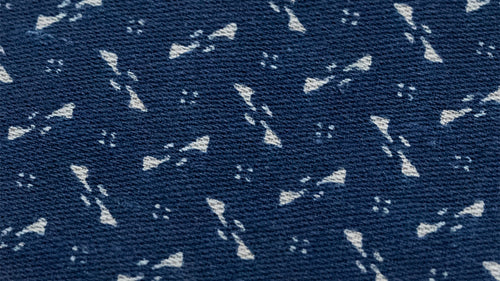
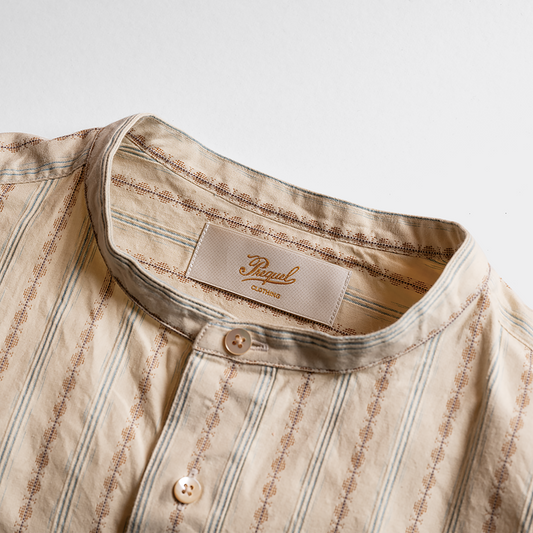
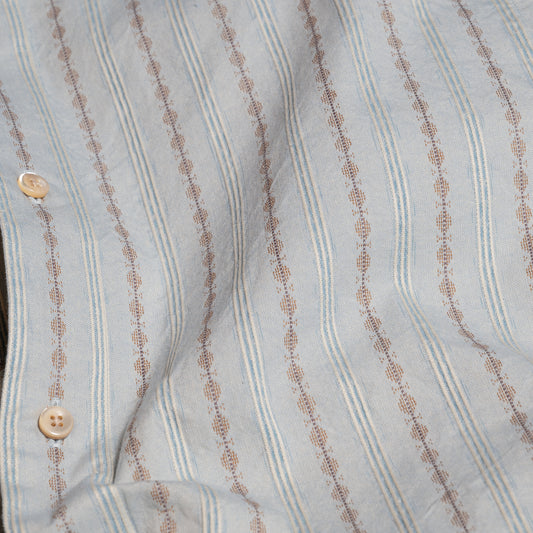
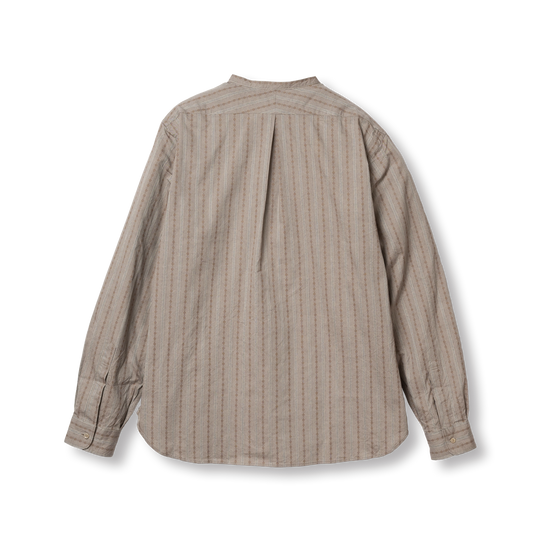
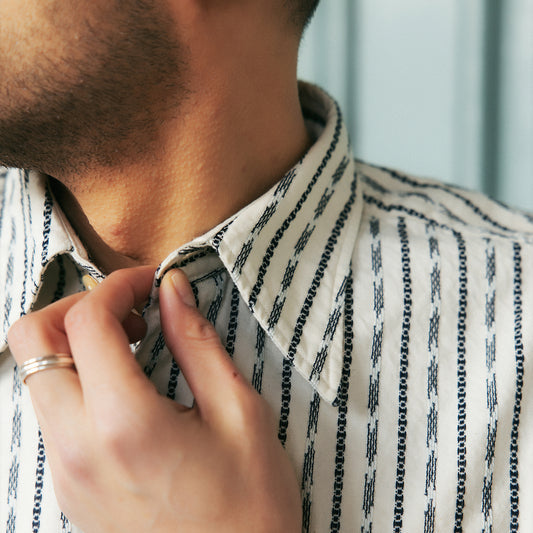
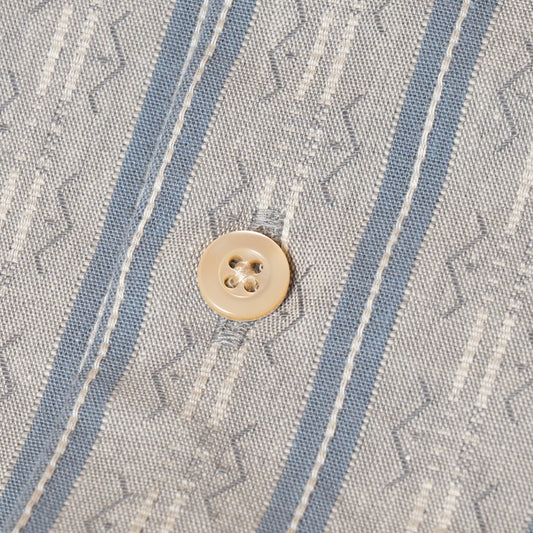
This vintage shirt, purchased at a flea market in France, is closely related to garments seen in early 20th century France, known as chemise and biaude.

At the time, these were not quite “shirts” in the modern sense,
but rather garments that existed somewhere between loungewear and workwear—
clothing deeply rooted in everyday life.
In an era when laundry was often handled outside the home,
garments were marked with initials or symbols to identify their owner.
The small embroidery on this piece is one such trace.

Its loose silhouette reflects its role as both sleepwear and loungewear.
It is said that pieces like this were sometimes worn much like pajamas.
At the same time, they were also used in working environments—
as underlayers or shirts for light labor.
Typically, a vest or jacket would be worn over it.

This particular piece features a fabric transition at the lower back,
designed to make tucking in easier.
Details like this suggest that it was not intended to be worn on its own,
but rather as part of a layered system.
At the time, affordable ready-made clothing was not widely available,
and garments were expected to be used for many years.
As a result, many pieces were designed with generous proportions,
allowing them to accommodate different body types
and serve both daily life and work.

For farmers and laborers, clothing was both a necessity and a resource.
New garments were not easily acquired—
they were repaired, reused, passed down, and circulated over time.
This shirt quietly carries the atmosphere of that era.
At PREQUEL, we take garments like this as a starting point,
imagining the lives and backgrounds they once belonged to,
and reconstructing them into forms for the present.